Custom Search

Sunday, September 19, 2010

In the House of the Flightless Bird

New Zealand has a unique set of fauna, and, since many species are rare, to fully appreciate them, we decided to pay a visit to the Otorohanga Kiwi House. The kiwi house has kiwi statue outside.

They Kiwi house has a large collection of almost all birds, they being the only large fauna to be found on the island. But the do also have a few other animals mixed in. There are no mammals, because New Zealand does not have any native mammals, not even marsupials.

They do have tataras. A tatara is a relatively primitive reptile, related to dinosaurs, though it does resemble modern day lizards. They also have geckos on display, and a small pool with eels in it. Like salmon, these eels go to sea when young, and return to their birth rivers to spawn. They are in many of the fresh water streams and creeks in New Zealand.

Among the birds, they have many species common in New Zealand, such as paradise ducks, grey ducks, oyster catchers, and the colorful pukeko, which can often be seen near roads and in fields.
They also had the islands' two parrots, the kaka and kea, and native parakeets, as well as the surprisingly large New Zealand Pigeon, a food source for the Maori. They also have the Weka, another flightless bird.


As the name might suggest, the Kiwi House does house kiwi, in a dark, red light lit room so that visitors can see them when they are active, because kiwi are nocturnal. Here they have two kiwis on display, though they keep them separated because they are capable of hurting each other with their long thin beaks. Sharing the airspace over both areas is a morepork, a small native owl. The kiwis run on thick muscles legs, like larger farm chickens. They hunt in the leaf litter of their enclosure, prodding with their beak looking for whatever worms or insects they might find. We were there for feeding time, and they were fed from a plastic cup with a mixture of fruits oats and worms. The hungriest of the pair simply fished around for a worm and slurped it up.

Before we leave, we take a walk through the aviary, where pigeons fly clumsily, tataras lurk, and quail nest under unfurling fern trees.

Just across from the park is a small park established by Otorohanga's Rotary Club. Here grow redwoods that were germinated from seeds send by a Rotary Club in California. The trees were planted in 1971, and so are fewer than 40 years old, and already very tall. This is a pretty little spot and as it's so close by it's worth the visit.

Thursday, September 09, 2010

The Nuraghes


The island of Sardenia shelters numerous ruins from a culture that existed 3000 years ago. These people built monolithic stone towers and cities, worked in bronze, and left behind little other evidence of their culture or history.

Cagliari is the capital of this island region of Italy. Within the city lies the local National Archaeological Museum, which has, among Roman and Phoenician finds, a curious collection of small Nuraghic bronze sculpted figurines.

Heading north across the island, through green forests and cork tree farms, we came across our first run in with the law. Two policemen were parked on the side of the road, waving traffic to the shoulder. Well, really, we were the only car around. They were dressed in almost comical uniforms, with buttoned up jackets, belt, and brimmed hat. One held a very small stop sign on a 2 foot long white stick. But we didn't dare laugh, since the other held an assault rifle. Neither spoke the others language, so we gave them our passports and wondered if we had been speeding. They checked our info, conferring on the hood of their car about it, returned it to us, and waved us on. This would be the first of 3 times we would be pulled over in such a random check. What they were looking for, I am not sure.

Finally we arrived at Su Nuraxi. Of the 8,000 or so remnants of Nuraghes this is one of the best preserved and most complex examples, earning it a spot as a UNESCO World Heritage Site. Here, thousands of years ago, the initial tower was built on a low hill, presumably to control passage through the area or for defensive purposes. Over the centuries, additional ringed fortifications were built, and the area developed into a small village or city.


A tour leads through the circular stone foundations of homes, shops, and some fortifications, before leading into the most central nuraghe. Here, large stones are stacked, without mortar, and doorways a capped with longer stones.


The walls are built in double layers, with the interior filled with dirt.


In the rooms and passageways, no light enters save through the primitive doors and windows, and sometimes holes left at the apex of conical roofs.


The interior is a open courtyard of sorts, though, being narrow amongst high walls, it is dim and cool. The rocks, as in the old wall above Arpino, are large. The structure seems incredibly primitive, but it has proven to last the centuries. Our tour, sadly, was in Italian. There are not many foreign tourists here. This place is secret. Quiet.

Sunday, August 29, 2010

Falls and Jet

The water from Lake Taupo flows out via the Waikato river. One section of this river narrows to form Huka falls. The falls are not very tall. In fact, the water flowing over the falls almost hides them. But the water is a churning froth. This is beyond white water. Even above the falls, the water churns, and is a strange pale blue, marbled with white. Where it gushes over Huka Falls into the large and suddenly wide river below, The water bubbles up solid white for dozens of yards.
We arrived at the falls overlook, early in the morning. we had the short walk along the narrow stretch of river to ourselves. After we had taken many pictures, none of which look quite real, we headed to hukafalls Jet to get a different perspective of the falls. After suiting up in a rain jacket and life vest that would have made both Neo and Superman proud, we loaded into the boat, Jake and I taking front row seats.

Riding in the boat felt like gliding on ice, as our pilot fishtailed the boat along the banks, in and out of tree stumps and small islands, and under the wings of escaping black swans. On the open water, he cut the wheel, and whoo! partially airborne 360! splash! We headed downstream for a bit, then turned and headed up for the falls. Many "close calls" with the river banks, and spins later, we arrived near the foot of the falls. We could go no further. That white boil of water was more air than H2O, and boats only float on water.

Thursday, August 19, 2010

Monreale Duomo and San Giovanni degli Eremiti

Just outside of Palermo is the town of Monreale. Here, the Monreale Duomo presides over an earthen colored city. Built by the grandson of the man responsible for Palermo's Cappella Palatina, this church outmatches it in sheer size as well as grandeur. Like the Capella Palatina, it has mixed Norman and Arabian influences.


From the exterior, the church is beautiful, but blends into the buildings around it. Walking through its doors, however, brings about such a change. Sunlight streams in through an arched window at the back of the church and sets the golden mosaic-ed walls dancing with light. The light fades towards the front of the church, where even more impressive mosaics lay somewhat in shadow.


At the very front of the church was a huge representation of Christ Christ Pantocrator. This church, while perhaps not a particularly familiar name, is thought by many to only be outdone by the better known Hagia Sophia.


From near the rear of the church, it is possible to climb, for a small fee, into the tower. After climbing some stairs, you work your way down a shoulder wide passageway overlooking the cloister courtyard below. Keep your eye out for a palm sized hole in a wood panel to your left. Here you can peer out into the church from among the rafters. Eventually, the passage opens onto a catwalk across the eave of the church's tile roof, affording a better view of the well manicured courtyard below. Then briefly through another narrow passage and up a few more stairs, and you will arrive near the pinnacle of one of the churches towers, affording a look away towards Palermo and the sea.


The cloisters themselves can be accessed by leaving the church and heading around to a separate entrance. There is an additional fee to visit them as well. The main attraction here is that each and every column in the colonnade around the cloister is uniquely carved. We were fortunate enough to arrive at a time of day when the lighting showed these differences in shadow and light. We opted to settle for the view from the doorway, and followed our stomachs across the street to a sort of convenience store hybridized with a cafe.


After what sadly turned out to be Italian microwaved dinners, we headed back towards Palermo to visit San Giovanni degli Eremiti. This church turned mosque turned church again has a solidly middle eastern exterior, which was unfortunately, all we were able to see. Because the church was undergoing major renovations, we were not able to visit it. Instead, we climbed a nearby tower with a guide, who pointed out the prominent red domes, as well as several other prominent buildings throughout Palermo.


With that, we were finished with Sicily, and headed next towards the Island of Sardenia.

Monday, August 09, 2010

Planting of Trees

In March we headed to East Tennessee to plant some trees with the Nature Conservancy and other partners. We met, in the foggy and chill early morning hours at a coal plant. Black grime covered the parking lot and trucks carrying loads of freshly mined coal rumbled in and out. After meeting with representative of the conservancy, we got into the car with Nature Conservancy employee Katherine Medlock. As we worked our way up through the hills along gravel service roads, past a coal slurry pond and numerous natural gas pumps, she told us a little about the program's efforts to improve the ineffective reclamation efforts on the strip mined hills.

When this area was reclaimed, after strip mining for coal, the soil was packed down hard to prevent erosion, and pine and locust trees were planted in a bed of non native grass. 30 years later, the only trees present were those planted by the workers, and they were stunted, their roots unable to penetrate into the compressed soil. That compression, and the dense thatch of grass that grew beneath and between the trees, prevented new seedlings from taking root. The aggressive grass also prevented other native plant species from occupying the reclaimed area.

As we continued up into the hills, we rose above the heavy fog into sunshine, beneath clear blue skies. In the vallies below, bright white lakes of fog shimmered against forested shores. It was a breathtaking view. Finally we pulled into a lot where other volunteers, mostly children with the Junior Marines, were gathering.

In order to solve the problems with the restored areas, a small patch of test area had been deeply plowed, and we were there to plant a collection of native trees that could grow in the loose soil, and allow the forest to develop. We planted red buds for their nitrogen fixing abilities, interspersed among several types of oak and chestnut. We worked with not just the Nature Conservancy, but also the Dept. of the Interior Office of Surface Mining Division, the Tennessee Wildlife Resources Agency, and the American Chestnut Foundation.

We were planting chestnut trees, which did not have the immunity to the chestnut blight, that has virtually wiped out the American Chestnut. These saplings were being planted to learn about how chestnut trees respond to such planting methods, to help ensure better success when planting the resistant chestnuts.

As we grabbed up dibbles and garbage bags full of trees, I wondered how long it would take us to plant this swath of plowed land. The answer was about three hours. Moving down the rows, alternating from left to right, we planted. Jake spearing a hole with the dibble, a volunteer from the DOI carrying the bag of trees, and me picking out trees and placing them into the hold while Jake pressed dirt in around them. The work was quick, and before long, we had warmed up in the sun. Here and there were pieces of coal, even a few fossils.

When we were done, we took the time to eat some snacks and listen to the various organizations involve explain their reasons for and roles in the work we had done today. As we headed back down to hill to our car with Katherine Medlock, I think we all felt a sense of satisfaction with the day's work.

You can read a little about this event on the Nature Conservancy's website.
http://www.nature.org/wherewework/northamerica/states/tennessee/press/press3936.html

Thursday, July 29, 2010

Palazzo Reale and the Archeological Museum of Palermo

We arrived early in the morning at Palermo's Palazzo Reale, which after having been occupied by Arabian, Norman and Spanish rulers over the centuries, now serves as Sicily's capitol building. We were there to visit the Cappella Palatina, and its first class mosaics covering not just the interior of the chapel, but also the wall that faces into palace's courtyard.

I was stunned by the detail of the outer mosaics and eagerly awaited our chance to enter the chapel.

  With us was a group of elderly Asian tourists. One of them was perhaps the oldest person I have ever seen. tiny, frail, wrinkled, and bent like an angle bracket, she relied on her can to prevent from toppling right over. She was, by my estimates one of the other grey haired tourists mother, and I would be surprised if she were not at least 100 years old. She had, despite her frailty, managed the stairs to this point; there was no wheel chair in evidence. Never let anyone say they are too old to travel.

When we entered the chapel, we were disappointed, not by the quality of the work, but by our inability to see it. Drop clothes hid the ceiling and the upper walls. Scaffolding reached towards the ceiling, somewhat obscuring what was visible. The down side, the reality, of visiting historical structures, is that they are often in the process of being restored. This was true of the ceiling in the residenz, the Brandenburg tor, and now, this place. We took the time to see what we could, but unfortunately, at that time, it was not very much.


Leaving the palace behind, we headed to the Museo Archeologico Regionale. Here, artifacts from all the great ancient eras of Italy are on display. Architectural elements and some Egyptian artifacts were of particular interest.

Monday, July 19, 2010

The Big Easy


My first visit to New Orleans was In late 2007 I believe. The weather was hot and humid as we wandered the area Near the aquarium. We wandered along and into some of the shops on the edge of the French Quarter, and down to Jackson Square, a lovely city park fenced in wrought iron, with a statue of Andrew Jackson as its centerpiece. On the sidewalks just outside the park, street artists sold their wares.

In front of the park is St. Louis Cathedral. This white faced church resembles a fairy tale castle. We poked our heads inside for a quick look, then headed back out onto the street. Between the church and Jackson Square was a wide cobbled way, filled with a few park benches. On one end were fortune tellers, on the other, a silver man, frozen in mid strum, playing his guitar.


The French Quarter is a mouse maze of businesses, with items for sale ranging from hot sauce to Mardi Gras masques and beads, to fine art. Sprinkled throughout are restaurants and bars, offering a true variety of options, from the expected Cajun faire and hurricanes, to the somewhat more surprising Italian, Chinese, and Indian.


Everywhere throughout the area, stands of beads from Mardi Gras past can be seen handing, off balconies, streetlamps, trees, and power lines.

Of course, with any visit to New Orleans, Bourbon Street is the real must see, but it's certainly not for children. Aside from bawdy window displays and the open doored strip clubs, some of the visitors themselves are sure to raise eyebrows. At night this street takes on a real party atmosphere, and gathers quite a crowd. Whatever you may have heard about New Orleans safety, I felt much more comfortable around the streets of French Quarter at night, even the more empty side streets, than San Francisco or Seattle in the early evening.

Of course the famed debauchery of New Orleans, and Bourbon Street in particular, attracts those who would save the heathen masses, or perhaps just insult them. Bearing signs that condemn such sins as being a liberal, feminist, or sports fanatic, they become merely part of the spectacle.

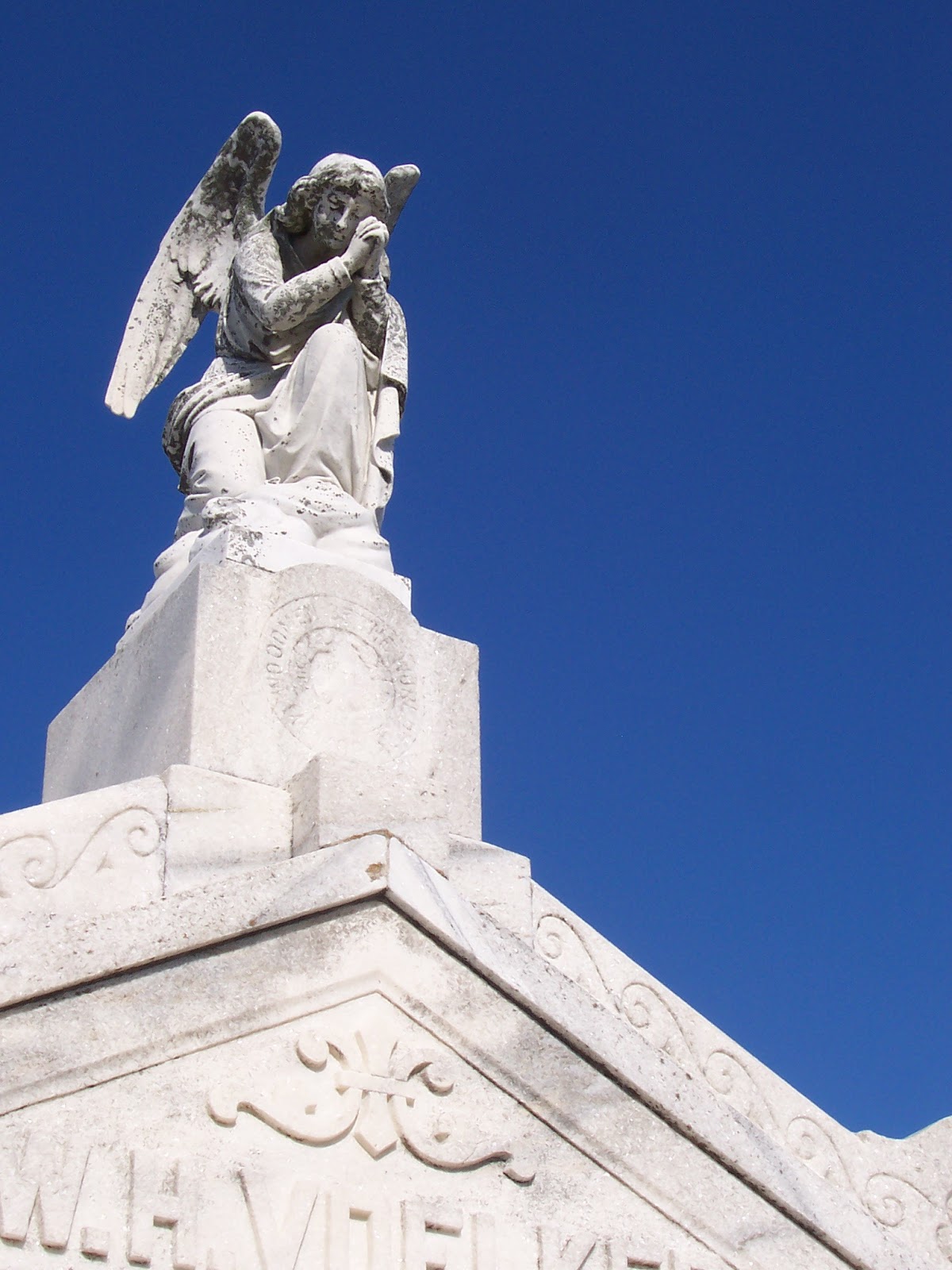
We did spend a fair amount of time in the downtown area, but we did take enough of a break to enjoy a trolley ride past the old houses and Loyola along St. Charles Avenue, and then enjoyed a walk up St Carrollton Ave to the Gelato Pazzo Caffe. It's well worth the little side trip. We also took a little time to wander one of the cemetaries around the city, which has it's own beauty.


While throughout town, the remnants of Katrina still remain, mostly in the form of high water marks and abandoned buildings, the city is very much alive, and very much worth a visit.

Friday, July 09, 2010

the Palermo hostel incident


We arrived on the outskirts of Palermo looking for our hostel, Baia del Corallo We easily found the bus stop it was supposed to be next to, but driving up and down the road, we saw no signs of the hostel, though we did find one other bus stop. Finally, we noticed a small sign on an equally small parking lot next to the first stop. It looked like it belonged to a small powerhouse of something next to the stop. Hung on the chain link fence surrounding the lot was a small sign for the YHA (Youth Hostel Association) We realized this was it. What would have been obvious to a backpacker coming off the bus was a little hard for us to find. Leaving the car outside the fence, where there was just enough room for a car, we entered the lot and saw steps leading down away from it.

The hostel consists of several little bungalows sprawled down the slope of a sea cliff. Surrounded by trees, it's a quite, well camouflaged place, at least until the water's edge bar gets going. Finally settling in to our room and bringing out car into the lot, we walked down the hill into this little stretch of seaside resort.

Wandering past several restaurants where seafood was understandably the food of choice, we finally came to a little ma and pa outdoor diner type of place. They served up hot sandwiches, more substantial than the average panini, and of every variety. Jake settled for the American, basically a cheeseburger panini. I was embarrassed to be unable to communicate, but the people running the shop took good care of us.

As we wound our way up the darkening street after our meal, we stopped in for some gelato from a little shop, and picked out spumoni. At this point, I had never had nor heard of this flavor, and I described it as mint chocolate bubble gum. I've never had any quite so good since.

Tuesday, June 29, 2010

Realm of Tane

A visit to the Realm of Tane, at Tamaki Maori village is an interesting ride. It starts with a bus trip to the grounds of the village, where we were greeted by the village warriors. Following that we entered through the gates and saw how a village may have been set up, and some of the activities that were carried out there. We moved into a meeting house, where they shared with us powerful haka dances, as well as sweeter songs. We left the meeting house and entered the dining hall to have some food cooked in a traditional hangi. The food is cooked by being buried in a pit with hot rocks. It is a similar method to the Hawaiian Kālua, often used to cook pigs for luaus, and no wonder, as the Maori people originated from that area.

Overall, the experience was fun and entertaining. The meeting house and dining hall we perhaps not the traditional experience I was looking for, but they weren't offensively so. The dancing was the best part. The food was somewhat bland, with the exception of desert, so please, have gravy with your meat, that is where the only real seasoning is.

Perhaps just as entertaining was the ride home, with the bus circling roundabouts while many were forced to sing songs they felt represented their country, whether they be anthems or other. While I was grateful not to have to sing, I was disappointed that the only other Americans chose to sing Itsy Bitsy Teenie Weenie Yellow Polka Dot Bikini....a song not on my list of conceivable options.

It appears that since my trip in the fall of 08, the website and the story theme of the trip has changed. I would assume the experience, however, would be roughtly the same.

Saturday, June 19, 2010

Phoenician Island

Not far north of Marsala on Sicily lies a shallow lagoon, protected by a crooked finger of land, the Isola Grande. Within this lagoon is a small island called Moxia. This island houses a museum of Phoenician artifacts, and is itself a former Phoenician city. Many areas here have been or are currently under excavation.

We pulled into a dusty parking lot, clearly marked with a sign that said there was no fee to park, and were promptly asked by the men at the booth for 2 Euro. We paid up, and headed over to the small boat that would ferry us to the island. There is a Phoenician bridge that connects to another part of the island, and you used to be able to walk or ride a carriage across, even though it was slightly under water. That's no longer possible, as it has become dangerous.

The first thing that greeted us on the island was this spiny aloe like bush.
Our first stop on the island was to view the museum. Here are displayed items from the island itself, and some from the surrounding areas. Particularly striking was the Phoenician smiling death mask. Phoenician work is distinct from it's Greek counterpart, more stylized and blockish, with the exception of Ephebus of Motya. This statue has a long flowing tunic, and is the foremost item on display.

After that, we headed on a path that took us to most of the numbered sites on the map.


Our first stop was the Casa Del Mosaici. These Mosaics are made from pebbles, placed so that only a narrow edge is shown, the body of the pebble thrust downward. This is unlike any Mosaics we saw elsewhere on our trip.


As we worked our way around the island, we noticed areas where there was almost no vegetation, and all the plant stalks were encrusted with empty snail shells of various sizes.


After that it was on to the cothon. This man made pool, connected to the ocean by a narrow path, may have been used to harbor small boats, or maybe something else. No one is sure. On the opposite side, we saw real live archaeologists at work.


Among other attractions on the island are the north and south gate, and the necropolis.


Finally, we caught a return boat to the mainland of Sicily, and headed north past the salt flats and old windmills in the lagoon.

Wednesday, June 09, 2010

The hottest city park in New Zealand


The area around Rotorua in New Zealand is still geologically active. We had originally planed on visiting a hot springs area and spa known as Hell's Gate, but due to airport delays and our own jet lag, we didn't have enough time to merit the admission. So instead, we headed to Kuirau Park which is located within the city. This is a city park like no other. Here you can explored some of the geothermal features, and we spending most of our time taking a walk around the steam enshrouded lake. Here's a little info about the lake's history from New Zealand's website:
In early Maori times the small lake in the park was much cooler and was known as Taokahu. Legend tells us that a beautiful young woman named Kuiarau was bathing in the waters when a taniwha (legendary creature) dragged her to his lair below the lake. The gods above were angered and made the lake boil so the Taniwha would be destroyed forever.


Saturday, May 29, 2010

Regional Archaeological Museum Baglio Anselmi

After our trip to the Valley of Temples, our next stop was at a museum on the northwestern edge of Marsala. We parked in a lot about a block from the museum, and just across the road from a clear blue Mediterranean Sea. We were closer at this point to Africa, than Rome. As we climbed out of the car, a small boy ran over to give us a card for his father's restaurant, where unfortunately, we did not have the time to eat.

The museum, also commanding quite a view of the sea, was once used to store barrels of that famous wine, but today it primarily houses the preserved remains of a large Punic warship. The boat is over 2000 years old, and was built by the Phoenicians who used it in the first Punic war to defend this area.

The museum consists of two high ceilinged rooms. One is used to store the ship, artifacts found with the boat, and information on its recovery and restoration. The other half holds a wide variety of artifacts, including pottery, stelae, personal artifacts such as mirrors, and even mosaic floor sections.

This museum is well worth a quick visit as you head up the coast of Sicily to Palermo. It is even more worth while if you are on your way, as we were, to the island of Mozia

Wednesday, May 19, 2010

King Tut: Atlanta

While visiting Atlanta over the Valentine's Day weekend, I visited National Geographic's exhibit TUTANKHAMUN AND THE GOLDEN AGE OF THE PHARAOHS. I hadn't read or heard much about the exhibit, but I thought the title was self explanatory, and I was excited. After paying the somewhat steep price, we entered a line for the exhibit. As we approached the entrance, we were ushered into a room, and shown a video about the discovery of Tut's tomb. Then, the great "stone" doors before us swung open, and we entered the exhibit. The first part of the exhibit consists of busts of other Pharaohs, and information about their reign and rule. Among my favorites was the long faced Bust of Akhenaten.

We moved from here into a room displaying jewelry of the empire. Fantastically detailed intricate metalwork, sometimes offset by stone settings. This was probably my favorite part of the exhibit. I love to examine the small details and see how the largest of pieces are so delicately put together.

Beyond we finally came to the Tut portion of the exhibit. Here are 50 artifacts recovered from Tut's long hidden tomb. They range from the impressive gold foil sandals and finger and toe caps that adorned the mummy himself, to the more basic items such as the wooden bed, looking like a low twin frame, that Tut may have slept on in life. But my favorite item was the Tutankhamun Canopic Coffinette. This item features on many of the posters advertising the exhibit, and can easily be mistaken for a full size sarcophagus, but it is in fact only about a foot or two tall. As with the jewelry, I was amazed by the fine details and workmanship, but even more so. Out of respect for other visitors, and likely security protocol, I did not press my face to the glass and stare at it for an hour, but I would have liked to.

As we left the exhibit of artifacts, there was an explanation of the various entombments that had surrounded the body. I rounded the next corner hoping that some of these sarcophagi were here. But I was admittedly disappointed to find only a multimedia display discussing a body scan that was done of the King's mummy. Although the web site's FAQ is quit clear, I could not help but feel a little misled.

Overall the exhibit is impressive, and it's well worth the slightly inflated price. Take your time and read the information on the walls, look hard at the jewelry, and just be amazed that these items are thousands of years old, and still quite impressive by today's standards.

Sunday, May 09, 2010

Jamestown and Yorktown: National Roots

For our last day in Williamsburg, we headed over to visit the historic site of Jamestown. After perusing the museum, we roamed the grounds, enjoying the setting. While there is not much left of the original settlement, you can explore the roads, and read the stories of the buildings that once stood along them, and the people that lived there. We also payed a visit to the Archaearium, which displays items found during Jamestown digs. After exploring the immediate site, we headed off on the driving loop to see more of the area. We wanted to visit the Jamestown Settlement, a living history reconstruction of Jamestown, but unfortunately, they were closed due to the holiday.

After we had our fill of Jamestown, we headed to Yorktown, which is handily included in the Jamestown National Park ticket price. Along the way we passed by a small lake where a pair of white swans were feeding. When we finally arrived in Yorktown, we were just in time for a Ranger led walk. I always love ranger programs at our national parks. The guides know their stuff, and seem to able to answer any question. We started at the top of the hill, discussed the British fortifications, and the types of canons used. Then we moved down the hill, between enemy lines and discussed the American army's approach and ultimate success in the last major battle of the American Revolution.

After our tour, we headed back to Williamsburg for one last show, an evening of dance at the governor's palace. We approached the house, lit by torches, in the form of iron bowls filled with burning wood attached to posts. We were led into one of the palaces ballrooms, aglow with a number of candles. In the corner sat two musicians, reading their music by candlelight. We were lucky to get front row seats and settle in for the show. I had been expecting an informative production, but what I got was far more theatrical, where we were just guests to a dance, and some were even asked to dance. In between dances done in full costume and makeup, the actors played out a small love triangle among the guests. Fortunately, all was brought to a happy ending, and we left for home the next morning, having had a wonderful start to the new year.

Thursday, April 29, 2010

Kooza Atlanta

Over Valentines weekend of 09, we headed down to Atlanta to see Kooza under the big top. Ever since I saw my first Cirque Du Soleil production on public television when I was younger, I've wanted to go actually see a show, so I was very excited to find that they were relatively near by.

This is one show where it is definitely worth it to arrive early. Before the show starts, there are actors in the aisles, in the seats, on the stage. So many clowns to entertain that it hardly feels like you are waiting for the show to start at all.

When the show finally does start, it remains a frequently funny, always interesting and some times artistically sweet production throughout. The entire show as a whole is rapid fire perfectly done entertainment. Some of the best acts are the incredibly quick juggler, and surprisingly fast contortionists. Equally impressive were the balancing chair and unicycle acts. Perhaps my favorite was a chance to watch a truly gifted pickpocket at work, on of all things an airline pilot.

The various characters, from the king and his clowns to the Innocent and his dog, provide the theatrical touch that makes a cirque production so much more than just a circus. Currently playing in New York, with additional dates across the US this year, this is a show not to be missed.

Thursday, April 15, 2010

Williamsburg: History in Action II

Our second day at Williamsburg found us at the DeWitt Wallace Decorative Arts Museum. After we had spent the first part of the day taking in some of the sites and shops we had missed the day before. We visited the blacksmith, the gun shop, and the Milliner's shop among others. We were at the museum to take a guided tour through the pottery collections and learn about the different styles and other interesting facts about the collections. While we were waiting, we had some very good chili from the restaurant there, and Jake took in the Lock, Stock and Barrel exhibit of colonial era guns.

When it came time for the tour, our guide started in the small Identifying Ceramics: The Who, What and Ware exhibit, using the displays there to explain the different methods and styles. Then, we were taken throughout the museums collections where we were shown many interesting pottery pieces which exemplified the different styles. After the tour was done, we explored some of the other areas of the museum, historic flags, furniture, and portions of the former Public Hospital for Persons of Insane and Disordered Minds, which occupies the building above the basement museum. We also made a stop in for some crafts: making Christmas ornaments form old Christmas cards. I love to have Christmas ornaments as souvenirs, and we wound up making two very attractive ones to go on our tree for hopefully years to come.

Then we headed for dinner among the Merchant Square's shops. We chose Season's from the options, and after we were seated were delighted to find that Friday nights were Prime Rib night. for $15 per person, we both enjoyed a fantastic steak with two sides and a salad.

After diner we took a much needed promenade down to the capitol building to wait for the soldiers to gather for the torch lit fife and drum march to the palace greens. Once the soldiers had struck up their drums, they began marching up the street. Some tourists ran along beside them, but Jake and I fell in step behind. It is amazing the quick and easy pace a march can set. It was an impressive display, despite the loose mob of tourists surrounding it, and I couldn't help but try to match my step to the soldier in front of me.

Thursday, April 01, 2010

florida panhandle

Our first introduction to the Florida Panhandle was Pensacola, where our route south deposited us. We didn't find much of interest here, and wound up swimming at Henderson Beach State Park in Destin on our first day in the area. The red, dangerous current flag was flying, and the waves were good. We wore ourselves out boogie boarding. I'm glad we got a chance to use them again. the last time we used them was several years ago at the outer banks. The sand on the beaches around Destin is pure white and is so fine it actually squeaks when you scuff your feet. There was little trace of sea life. No shells or crabs, just some sea weed and birds.

We had lunch at the Destin Diner. The food was good home style stuff. Jake has country fried steak, I had Italian meatloaf with marinara, and we both had hash browns and fries for sides. Service was awful, despite the fact that there was almost no one there, but you can hardly hold one bad server against a place. We had dinner at a place called Bobos or Bozos, or something like that. It wasn't in Destin, but further east. They had a children's dance contest including the cha cha slide and the chicken dance and a kids limbo competition. Then the fellow orchestrating all this sang some memorial day appropriate songs. It was pretty fun actually. the food was good, we had a chicken sandwich and a burger though, because the prices here are outrageous. I wasn't too surprised that beef and even chicken ran high at about $18 for the cheapest steak, $16 for chicken, but I thought, gee, maybe that the seafood would be cheap?? no... it costs as much as steak.... that's why we had sandwiches. They were only about $8 each.

We had hoped to stay at the campground in the park, but as it was full, we contented ourselves to use their showers. This was pretty much the way it went for the next few days. Every campground was full, so we slept in the car every night, and just used the showers in the parks to keep clean.

When we woke up, we were a little tired from swimming, so we headed inland to Rocky Bayou State park, and explored 2 of the trails there, the Rocky Bayou trail, and the Puddin Lake trail

The first trail led amongst live oak and saw palmettos, and was covered with unnumbered scurrying lizards. There was also a smake, and a frog along the way as well. the Puddin lake trail was a good deal more interesting. It led along a marshy lake, and in the low branches of a tree we spotted an anole, a bright green lizard with a pink colored fan on his throat, which he would open as he bobbed up and down doing pushups. Just a short ways further we saw two large birds of prey in a massive stick nest at the very top of a dead tree, which reached well beyond the tops of the living trees around it. We both jumped to the conclusion of bald eagles, but binoculars revealed that this was a pair of osprey. After watching them for some time, we continued on the trail and saw a turtle crawling up from the small lake, covered in fresh mud, and also a few dear in the undergrowth just across the water. We spent the remainder of the day reading along the shore of the lake here, and then headed down towards panama city.

in panama city they have a nice little park, I believe it is called oaks on the shore. We went down to a beach there and saw many many hermit crabs and fiddler crabs, and Jake picked up a couple empty shells to bring home.

then we ate at the treasure ship, which is a full size replica of Sir Francis Drake's ship, the Golden Hind. Why yes, it was delighfully touristy, tacky, and yet... unrefined. the prices here were better by a couple dollars. I got the steak (fantastic) and Jake got the mahi mahi fried fish basket (pretty good) and we split half and half.

we realized when we returned to the car that Jake's empty shells weren't so empty, and we returned them to their beach. After that we drove way down to Port St. Joe and spent the night again in the car.

In the morning we headed to St. Joseph's Peninsula State Park. There were only gentle waves here, and the water was a murkier green. There were lots of shells here. We then headed to the inland side of the peninsula, and walked a trail along the shore. Here, the brown pelicans were diving like crazy. The water on the inside is beautiful. The sand bars in the water cause the shades of blue to shift with the depths and create a kaledescope of every cool shade. There are streaks of bright green and pools of dark blue. we also saw more fiddler crabs, and spent quite a lot of time watching them gesture and fight. we also saw a dried and dead horseshoe crab, but no live ones. We stopped for pizza at Hungry Howie's pizza and subs. This is apparently a Florida chain, as I've never seen them elsewhere. The pizza was about pizza hut quality/style. We also stopped for a Shrek Shake at McDonald's... they are good, and disgusting looking. We wound up driving back up to Panama City in search of better waves.

We found some waves at Saint Andrews SP. here they were crashing, and Jake finally persuaded tired me to boogie board some more. The waves were huge, but broke unpredictably. I did manage to ride a few almost all the way up the beach though. Mostly I just got knocked about a lot, but it was still great fun. At one point a little cruise ship turned in towards the beach, undoubtably giving dolphin tours as about 4 dolphins immediately appeared near it. Finally we headed back to the showers... only, there were no individual showers, just the exposed shower heads every beach has. Despite the fact that their website claims showers are available. So I did the only sensible thing. I washed and conditioned my hair in the sand showers available. About this time a pirate ship rounded the corner and appeared in front of the beach, and about this time we headed for home. We stopped before leaving the park to check out some wild alligators in a pond, with an island of brushy trees in the middle. the trees were weighed down with Great White and Great Blue herons. a few possibly green herons,and snowy egrets. Great Blue Herons are definitely the most aggressive of the bunch. All these birds were nesting. The alligators barely moved.

We stopped for some quick dinner at Whataburger, another small chain. The food was ok. We made it into southern Alabama by night, and finished the drive home in the morning. we made a brief stop in Decatur for some BBQ. and to stretch our legs at a park there. Once home, we did the final thing that was "included" in our vacation: we saw Pirates 3. very good. But if you didn't like the second one, you probably won't like this one. it's full of action and special effects, and borders on the ridiculous. I think there will be a sequel. I'm not sure if it was a happy ending or not. You'll have to see it and decide for yourself.